



 Measures for Tsunami Striking Nuclear Power Station in Japan
 Planning and Consideration on SFR R&D Activities in China
| Vol.1 No.2 ← GA 6 - 7 - AA 8 - 9 - NT 10 - 11- 12 - 13 → Vol.1 No.3 | |
| Academic Articles | |
| (Technical Note) | Vol.1 (2009) p.87 - p.98 |
| Manufacturing of Low Neutron Irradiation Embrittlement Sensitivity Core Region Shells for Nuclear Reactor Pressure Vessels | |
| Mikio KUSUHASHI1, Yasuhiko TANAKA1,*, Tsuyoshi NAKAMURA2, Tomoharu SASAKI2, Yoichi KOYAMA2, and Hisashi TSUKADA1 | |
| 1 The Japan Steel Works Ltd., 1-11-1 Osaki, Shinagawa, Tokyo 141-0032, Japan 2 The Japan Steel Works Ltd., Muroran Plant, 4 Chatsu, Muroran, Hokkaido 051-8505, Japan |
|
| Abstract | |
| Neutron irradiation embrittlement of nuclear reactor pressure vessels (RPV), which occurs in the core region material during service, is a critical issue for the safety and reliability of nuclear power plants. The copper (Cu) and Phosphorus (P) that occur as impurity elements in RPV steel may not only reduce its fracture toughness but significantly increase its susceptibility to irradiation embrittlement. In order to manufacture materials with low susceptibility to neutron irradiation embrittlement and high fracture toughness, technologies to reduce these harmful impurity elements have been established at the Japan Steel Works, Ltd. (JSW). These technologies employ a double degassing process with the use of high purity raw materials. In this way, the content level of these impurity elements has been reduced as low as can possibly be achieved in an industrial refining process. This technology has been applied to the manufacture of large components made from the world largest ingots, which weigh up to 600 tons. It has also been confirmed that these high purity steels develop a good degree of toughness and strength even in heavy section forgings for RPV. A neutron irradiation test was performed in order to investigate the irradiation embrittlement of forging grade steels. The test revealed a small degradation of toughness, at a level that is consistent with the degree of neutron irradiation embrittlement accepted by authorized standards. Furthermore, the advantage that a low Si version of steel offers in terms of susceptibility to neutron irradiation embrittlement is also suggested. | |
| Keywords | |
| core region shell, irradiation embrittlement, chemical elements, impurity, manufacturing technology, forging | |
| Full Text: PDF | |
| (Received: February 3rd, 2009) | |
 |
|---|
 |
|
|
Vol.10 No.2(Aug) |
|
| < Other Issues | |
|---|---|
 |
|
|---|---|
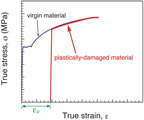 |
A New Mechanical Condition-based Maintenance Technology Using Instrumented Indentation Technique |
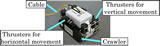 |
Survey robots for Fukushima Daiichi Nuclear Power Plant |

Contacts
(EJAM): ejam@jsm.or.jp
(JSM): secretariat@jsm.or.jp
HP: http://www.jsm.or.jp
(in English)
